The Critical Window: Reaching Oncology Patients Before First-Line Treatment
Published Sept. 10, 2026 | 4 Minute Read

Key Takeaways
- The waiting period between an oncology diagnosis and first-line treatment can take weeks, during which patients are highly anxious and actively seeking information about their treatment options.
- Traditional claims-based targeting is often too slow to reach these newly diagnosed patients during their critical decision-making window.
- Leveraging authentic, community-driven data allows pharma brands to connect with and educate patients in real-time, driving proven, high-quality audience engagement before claims data even registers.
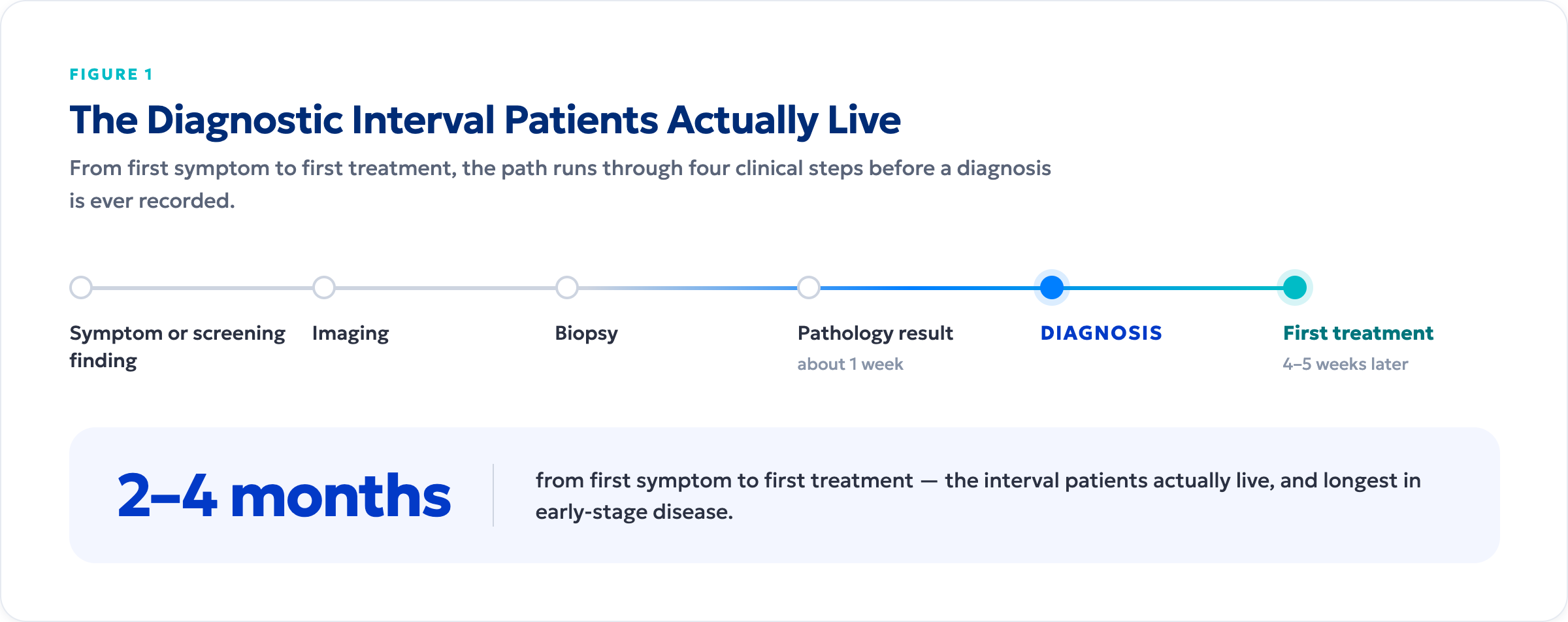
For newly diagnosed oncology patients, time is everything. Yet, a median of four to five weeks passes between a lung cancer diagnosis and the start of first-line treatment. And rather than shrinking, that gap has been widening.
For pharma marketers, this window presents a unique challenge—and a powerful opportunity. Between the moments of peak anxiety, biopsies, and waiting for pathology results, patients aren’t just waiting; they are actively seeking answers.
Here is why reaching patients during this crucial pre-treatment window matters, and how community-driven data can help oncology brands connect with them when they need it most.
The Clock Starts Before Diagnosis
The patient journey doesn’t begin at the doctor’s office with a formal diagnosis; it starts at the first symptom. From that initial symptom to the first treatment, the interval can span two to four months. Even in early-stage non-small cell lung cancer (NSCLC), the median time from diagnosis to treatment is 28 days—and that timeline increased by 31% over a recent decade. Today, over 42% of NSCLC patients start treatment more than four weeks after diagnosis.
This waiting period is filled with uncertainty. Anxiety typically peaks after a biopsy. During this time, patients turn to the internet to read, learn, and make sense of their new reality. Health Union’s oncology communities are exactly where patients spend this time. In fact, 1 in 10 Health Union visitors receives a new diagnosis within 60 days of their visit.
The Education and Awareness Gap
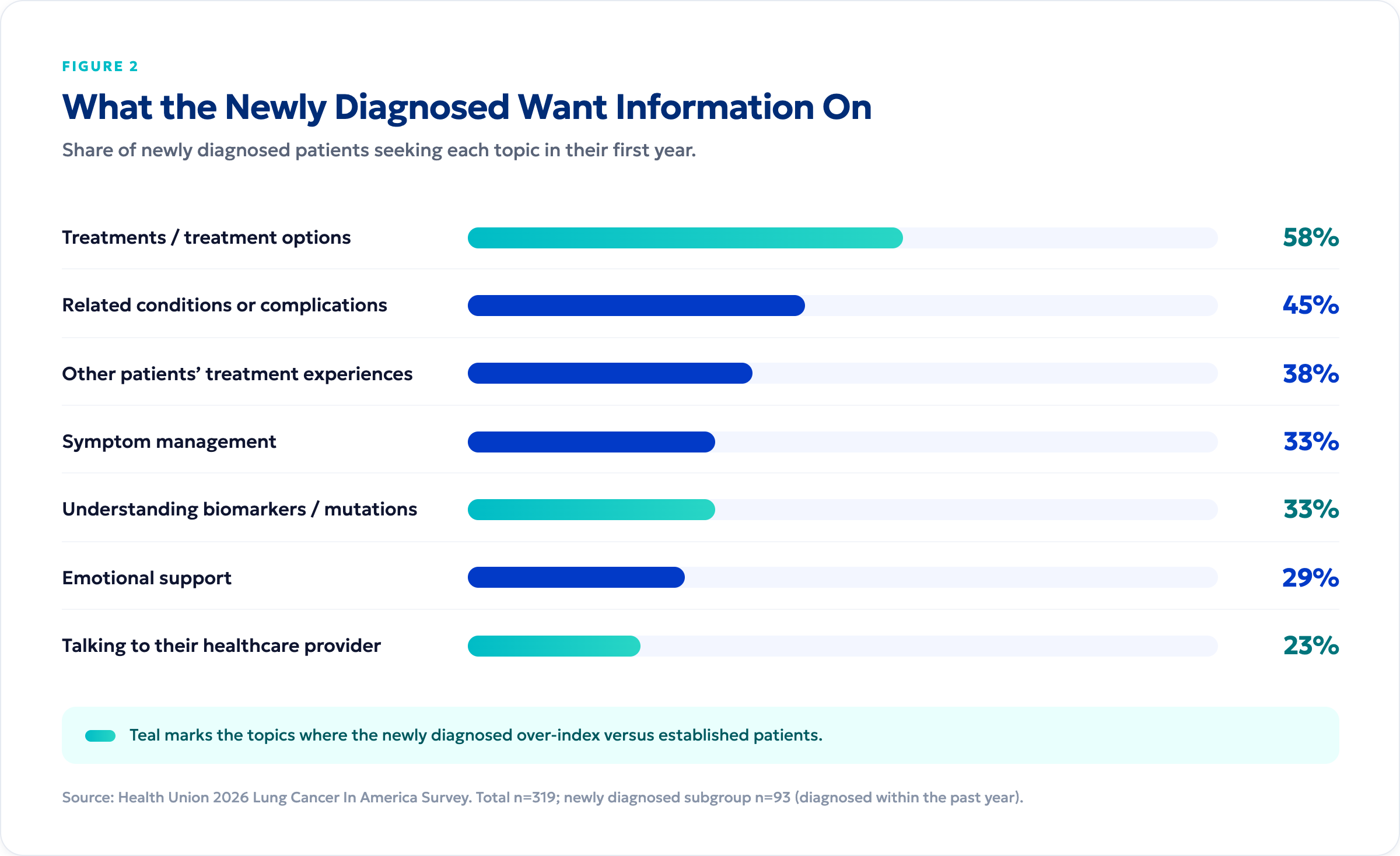
These newly diagnosed patients are hungry for information, but they are often navigating a massive education gap. According to Health Union’s 2026 Lung Cancer In America survey, nearly a third (29%) of our lung cancer community was diagnosed within the past year.
What are they looking for? The majority (58%) arrive seeking treatment options—their number one content need. Yet, many lack the critical information needed to make informed decisions. For example, 88% of newly diagnosed patients do not yet know their PD-L1 biomarker status.
Crucially, the treatment decision has not yet been made. Across our lung and bladder cancer communities, up to a third of newly diagnosed patients have never taken any treatment. This creates a massive awareness gap. In our surveys, while 62% of newly diagnosed lung cancer patients had heard of a default competitor brand, only 12% were aware of other specific first-line options. That 50-point awareness gap occurs at the exact moment the first-line treatment decision is being formed.
The Blind Spot of Claims-Based Targeting
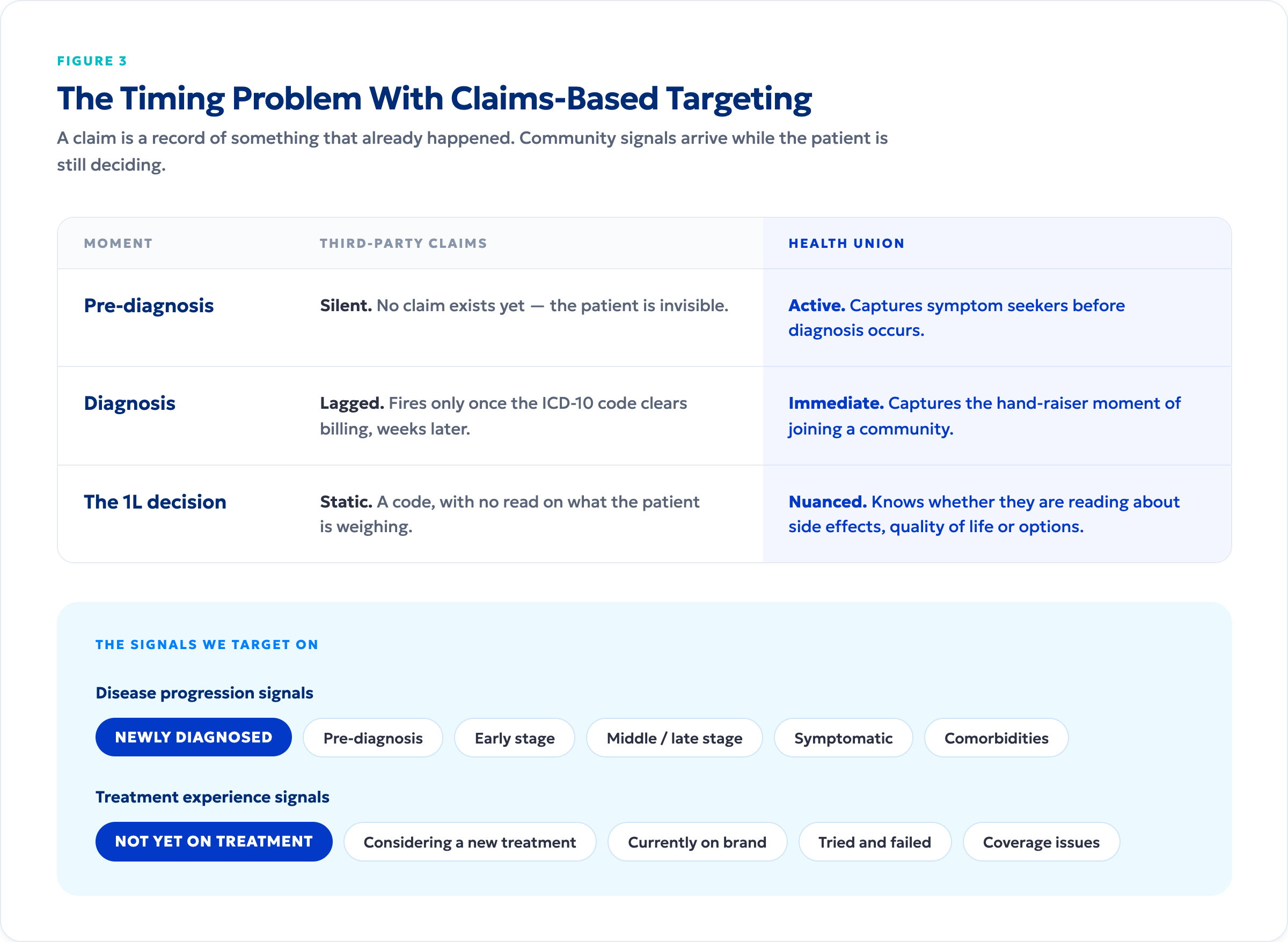
Many pharma marketing strategies rely on third-party claims data to reach newly diagnosed patients. But this approach has a critical timing problem: a newly diagnosed patient is virtually invisible to claims-based targeting for weeks.
- Pre-diagnosis: Claims data is silent. No claim exists yet, making the patient invisible.
- Diagnosis: Claims data is lagged. It only fires once the ICD-10 code clears billing, which can take weeks.
- The 1L Decision: Claims data is static. A billing code provides no nuance or insight into whether a patient is weighing side effects, quality of life, or alternative options.
At Health Union, we find these patients now. We capture the hand-raiser moment when they join a community. Instead of waiting for a billing code to clear, we leverage over 45 billion engagement signals—knowing precisely when a patient is symptomatic, considering a new treatment, or dealing with comorbidities.
Proven Impact for Oncology Brands
By engaging patients within a trusted environment, pharma brands can provide the education and support newly diagnosed patients desperately need. Reaching this audience is not just theoretical; it’s proven.
In recent third-party-measured programs targeting newly diagnosed, treatment-naïve populations, Health Union delivered unparalleled results. For a metastatic NSCLC campaign, we drove 10.5x higher audience quality compared to industry benchmarks. For a bladder cancer campaign, we reached 10x more diagnosed patients at a fraction of the cost. Across recent oncology plans, Health Union ranked as the #1 endemic partner for qualified reach, audience quality, and cost per qualified patient.
Bridging the Gap with Community The weeks before first-line treatment belong to the patient. It’s a time of intense research, vulnerability, and decision-making. By leveraging the power of authentic patient communities and sophisticated, privacy-safe targeting, oncology brands don’t have to wait for the claims data to catch up.
They can be there exactly when the patient starts looking.