Women Have the Symptoms. What They Need Is a Shared Language With Their Doctors.
How patient communities and a shared vocabulary between women and HCPs can help close the women’s health gap
Published November 19, 2026 | 6 Minute Read
Key Takeaways
- More than half of women with endometriosis signs are undiagnosed, and many leave appointments unheard.
- Women want help talking to their doctors, so they turn to patient communities for the words.
- A shared vocabulary across patient and HCP programs helps close the women’s health gap.
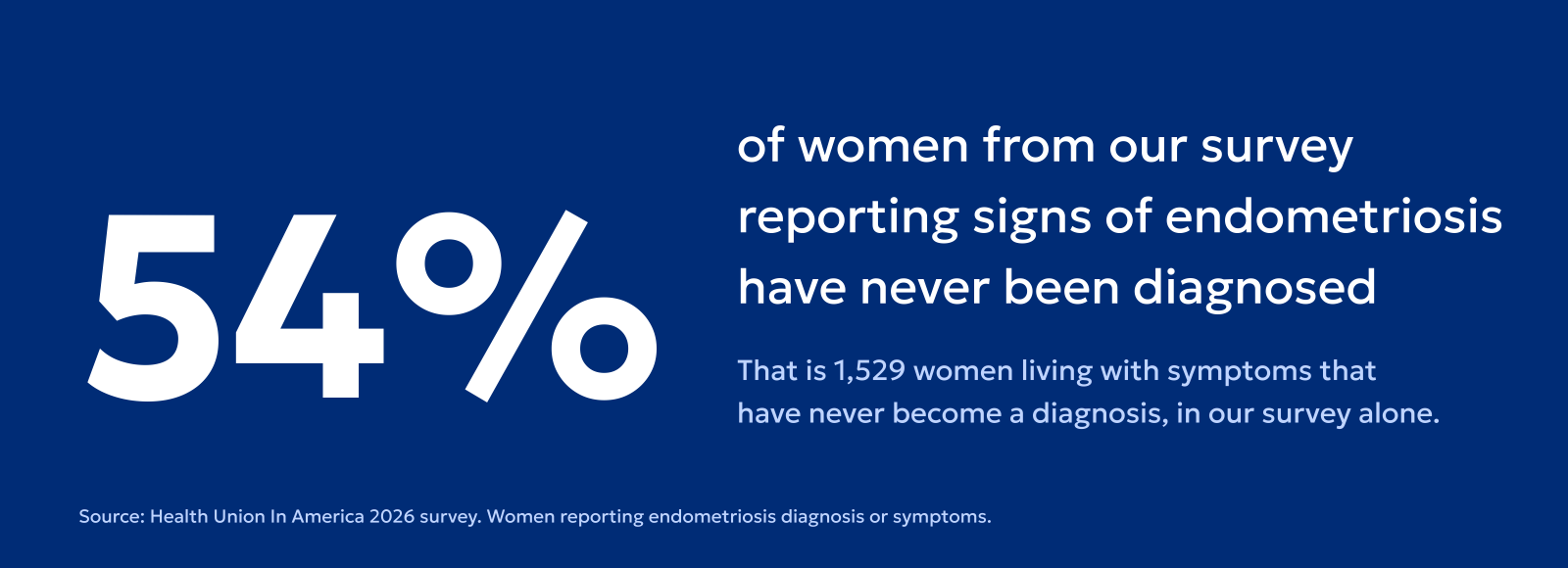
More than half of the women in Health Union’s 2026 In America survey who report the hallmark signs of endometriosis have never been diagnosed with it. That accounts for 1,529 women living with pelvic pain, bloating, and cycle-linked symptoms that have never made it into a medical record. Across our women’s health communities, members describe this exact women’s health gap every day: they know something is wrong, they walk into an appointment to explain it, and they leave without an answer.
The women’s health gap is usually framed as an issue of research funding or care access. While both play a major role, our data points to a third barrier that healthcare brands are well-positioned to address: the disconnect between how women describe their daily symptoms and what their providers have been trained to recognize. When those two vocabularies fail to overlap, women end up carrying the burden of proving their symptoms are real, and diagnoses get delayed.
The Gap Shows Up Before the Diagnosis
The 2026 data from Health Union’s flagship long-form annual patient survey, In America, analyzed responses from nearly 14,000 women and more than 4,200 men living with chronic conditions, revealing clear disparities in how they experience care. Women report an average of eight diagnosed conditions compared with fewer than six for men, and three in four women are managing five or more.
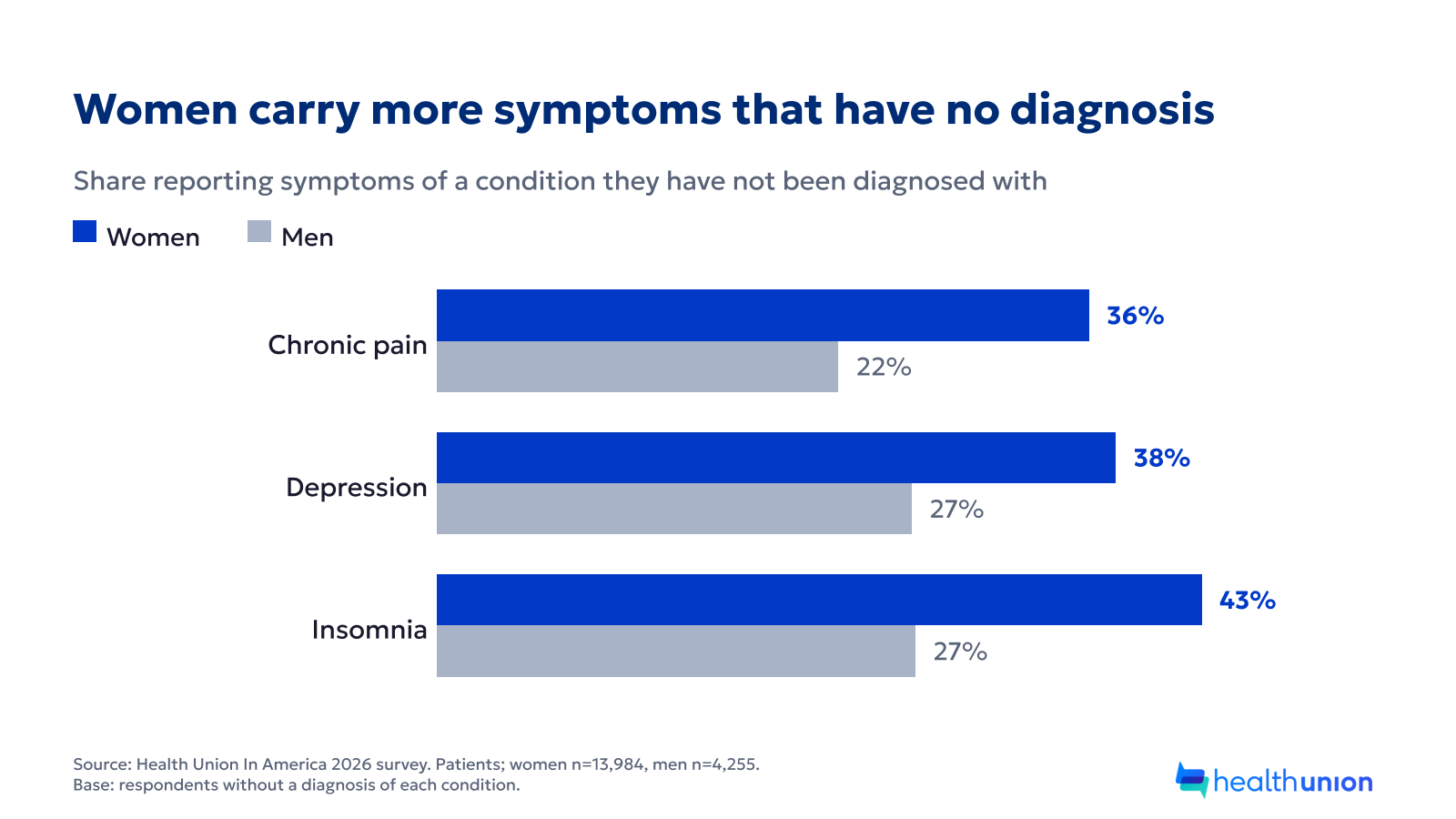
Even with that heavier diagnosed load, women carry significantly more symptoms that have never been formally identified. Among respondents without a chronic pain diagnosis, 36% of women still report chronic pain symptoms compared with 22% of men. The same pattern holds for depression symptoms (38% vs. 27%) and insomnia symptoms (43% vs. 27%).
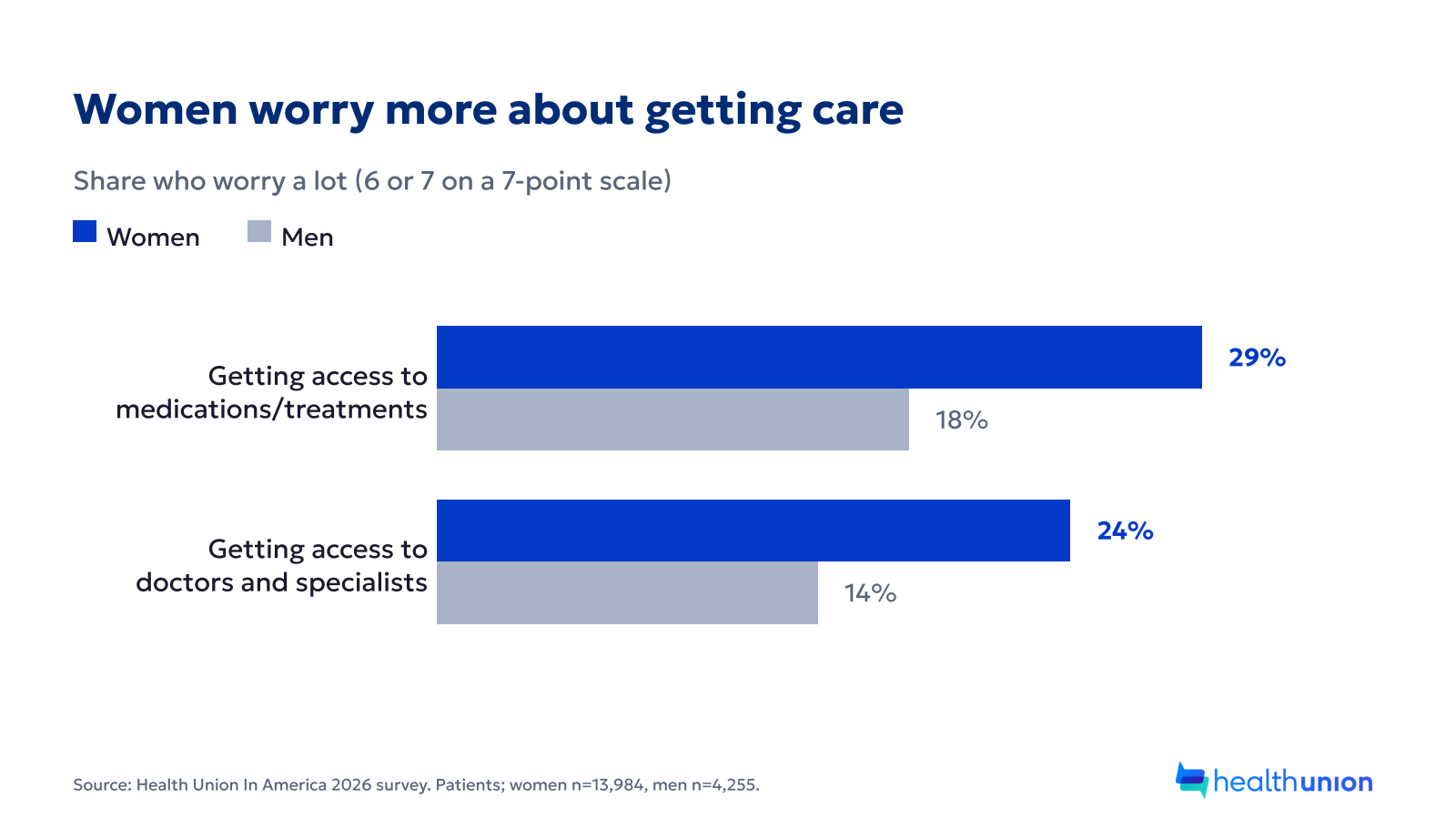
Access concerns widen this gap further. Women in our survey are about 1.7 times as likely as men to worry a great deal about getting in to see doctors and specialists (24% vs. 14%). They are also considerably more likely to worry about securing access to the medications and treatments they need (29% vs. 18%).
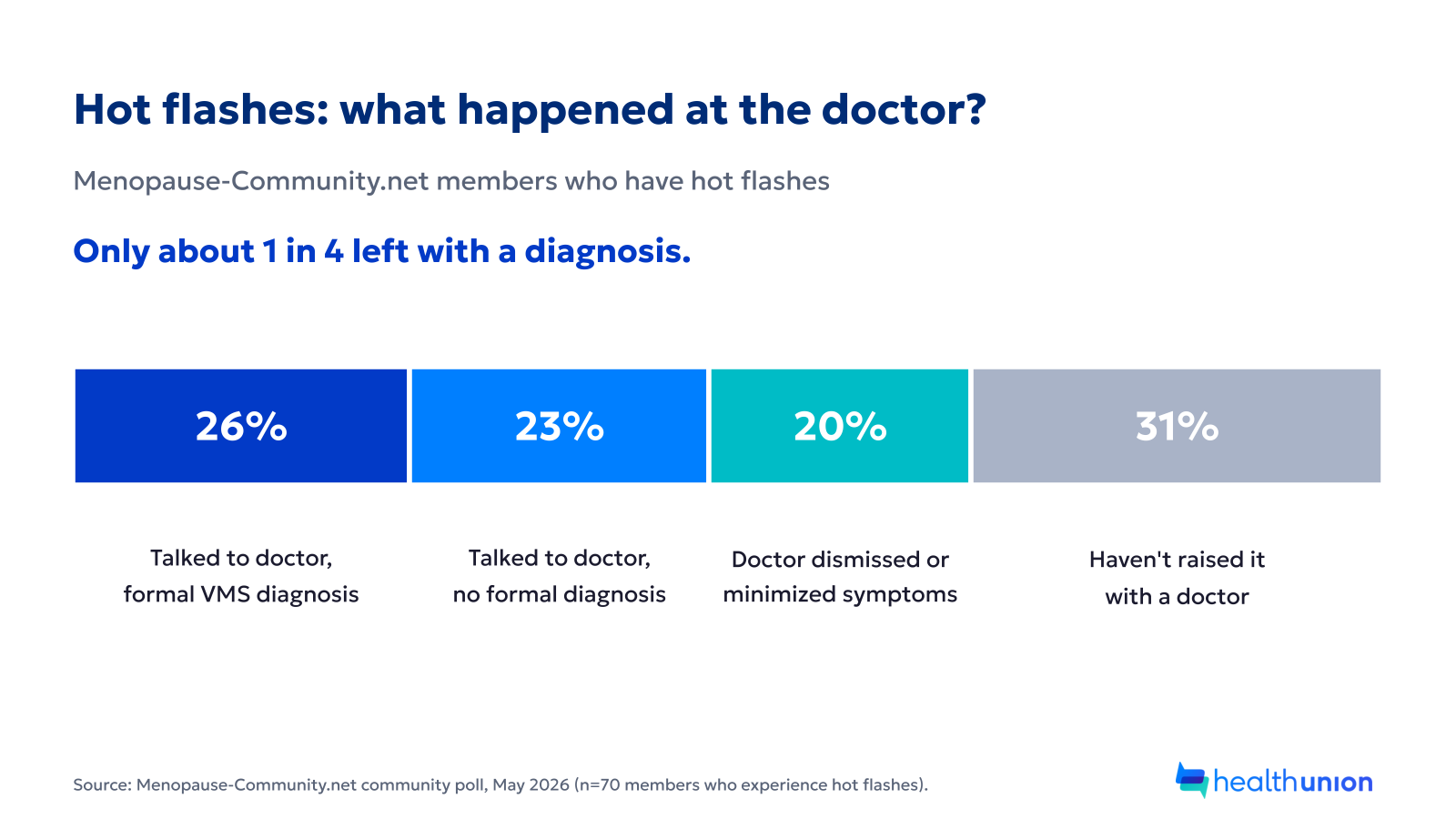
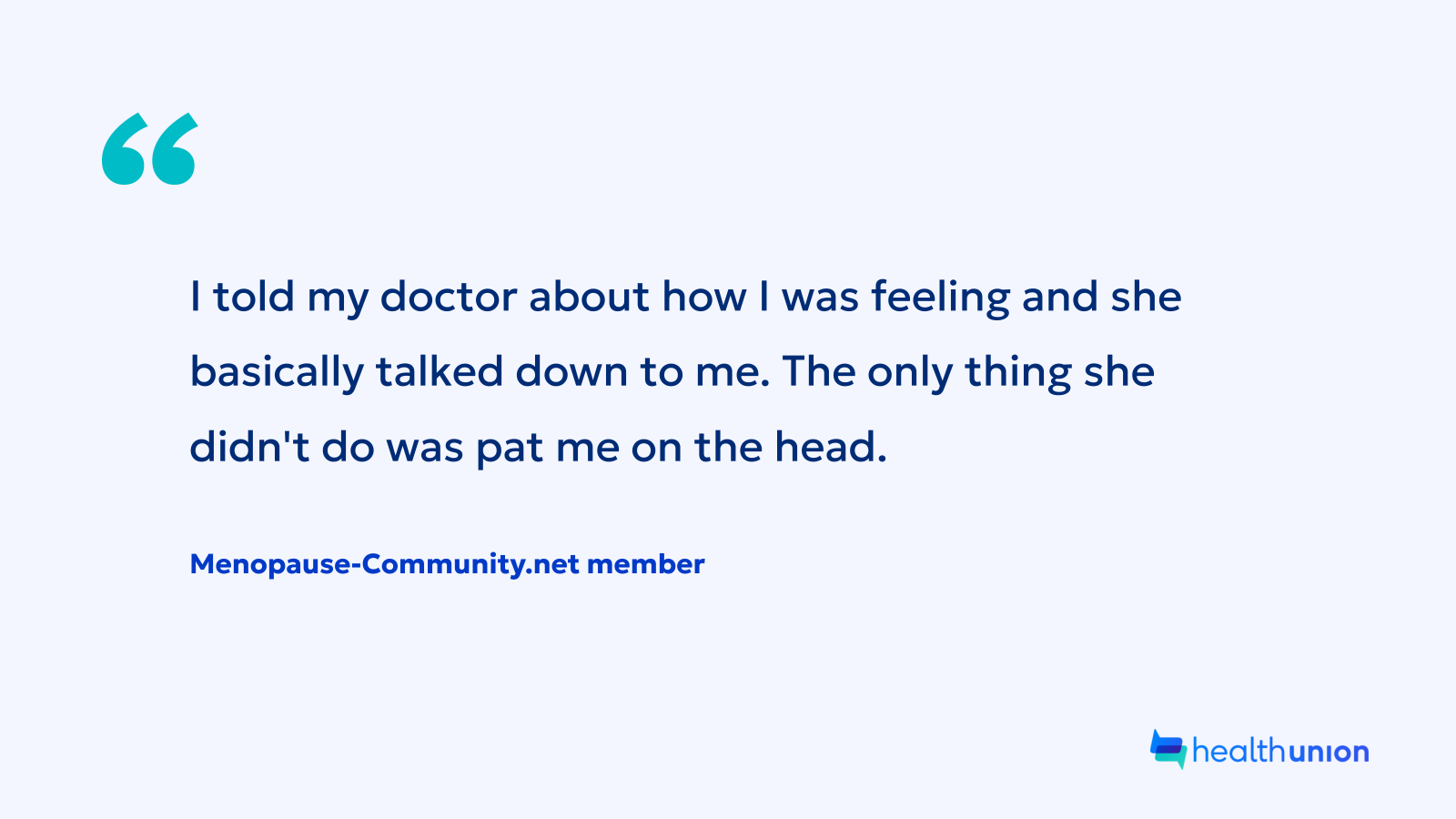
We see this exact dynamic play out in menopause. In a recent poll of Menopause-Community.net members who experience hot flashes, only about a quarter had received a formal vasomotor symptoms diagnosis. One in five said their doctor dismissed or minimized their symptoms, and nearly a third had avoided bringing up the topic altogether. One member shared a story that many others in the community immediately recognized:
“I was referred to a male gynecologist. He told me it was anxiety and panic attacks. I was not being heard. I vowed that I will find an answer. I googled every symptom.” NJF1969, Menopause-Community.net
Women Are Asking for Help With the Conversation Itself
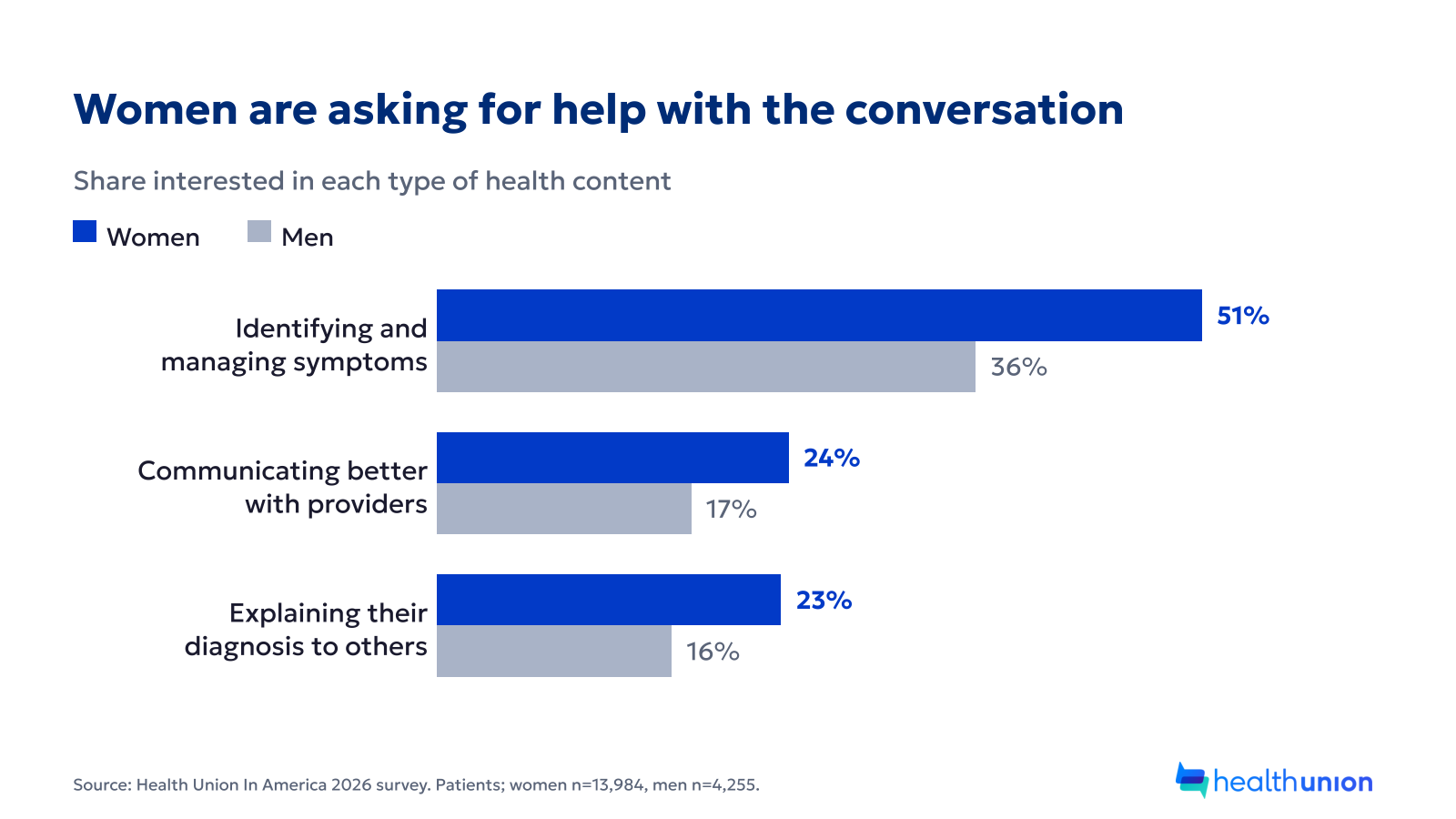
What stands out most in the survey data is the specific type of support women are looking for. When asked what kind of health content interests them most, women were about 1.4 times as likely as men to want guidance on how to communicate better with their healthcare providers (24% vs. 17%). They were similarly more likely to want help explaining their diagnosis to others (23% vs. 16%), and half of women want help identifying and managing symptoms, compared with just over a third of men.
Taken together, these numbers show that women are looking for practical vocabulary. They want words that carry weight during a 15-minute appointment. Our communities show what happens when patients lack that language: some stop raising symptoms entirely, while others downplay what they are feeling before a provider even has the chance to evaluate it.
“I get so much anxiety going to the doctor and always down play my symptoms because of how stupid doctors constantly make me feel.” dejesua, Endometriosis.net
“I have no idea what’s going on with my body because I was never told about it how you supposed to feel with menopause. Even PMS learned in school.” Rachael, Menopause-Community.net
Community Is Where Women Find the Words
Rather than waiting for the healthcare system to catch up, women seek out peers who are living with the same reality. In our survey, 32% of women use online support groups, forums, or patient communities to learn about or manage their health, compared with 23% of men. Additionally, 46% turn to condition-specific websites, compared with 33% of men.
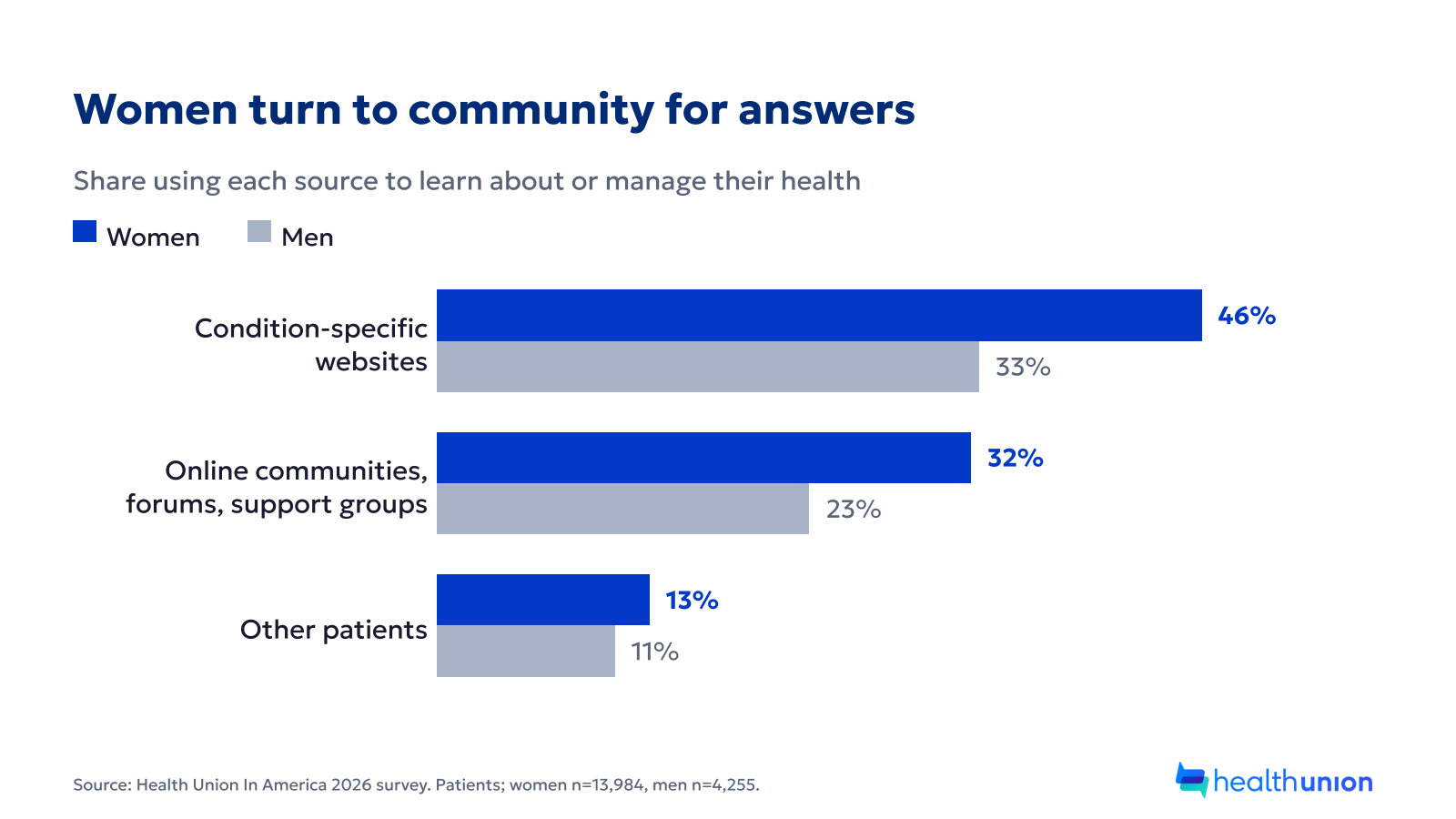
Inside moderated communities, members teach one another how to show up prepared for clinical visits. They trade symptom-tracking habits, compare how they describe their pain, and coach newer members on the specific questions that finally prompted a provider to investigate further. This peer exchange puts self-advocacy into practice, turning a vague feeling that something is off into a structured, organized account that a clinician can act on.
“I found that writing down my symptoms, how they affect my daily life, and going in with specific questions helped me feel a little more in control during appointments.” PoojaS, Endometriosis.net
Advocacy Works Best When the Provider Speaks the Same Language
Self-advocacy still hits a wall if the clinician across the exam room has not been primed to recognize what a woman is describing. Even women who arrive fully prepared can walk away feeling unheard, and the responsibility for closing the diagnostic women’s health gap should never rest on patients alone.
This is where a shared vocabulary makes a measurable difference. When the concerns, symptoms, and phrasing circulating among patients match the clinical insights providers are receiving, both sides of the appointment arrive ready for the same conversation. A woman describing brain fog, night sweats, or pain that tracks with her cycle meets a clinician who has already seen those exact patient descriptions framed in a clinical context. Instead of debating whether the symptoms are real, the visit moves productively toward a diagnosis.
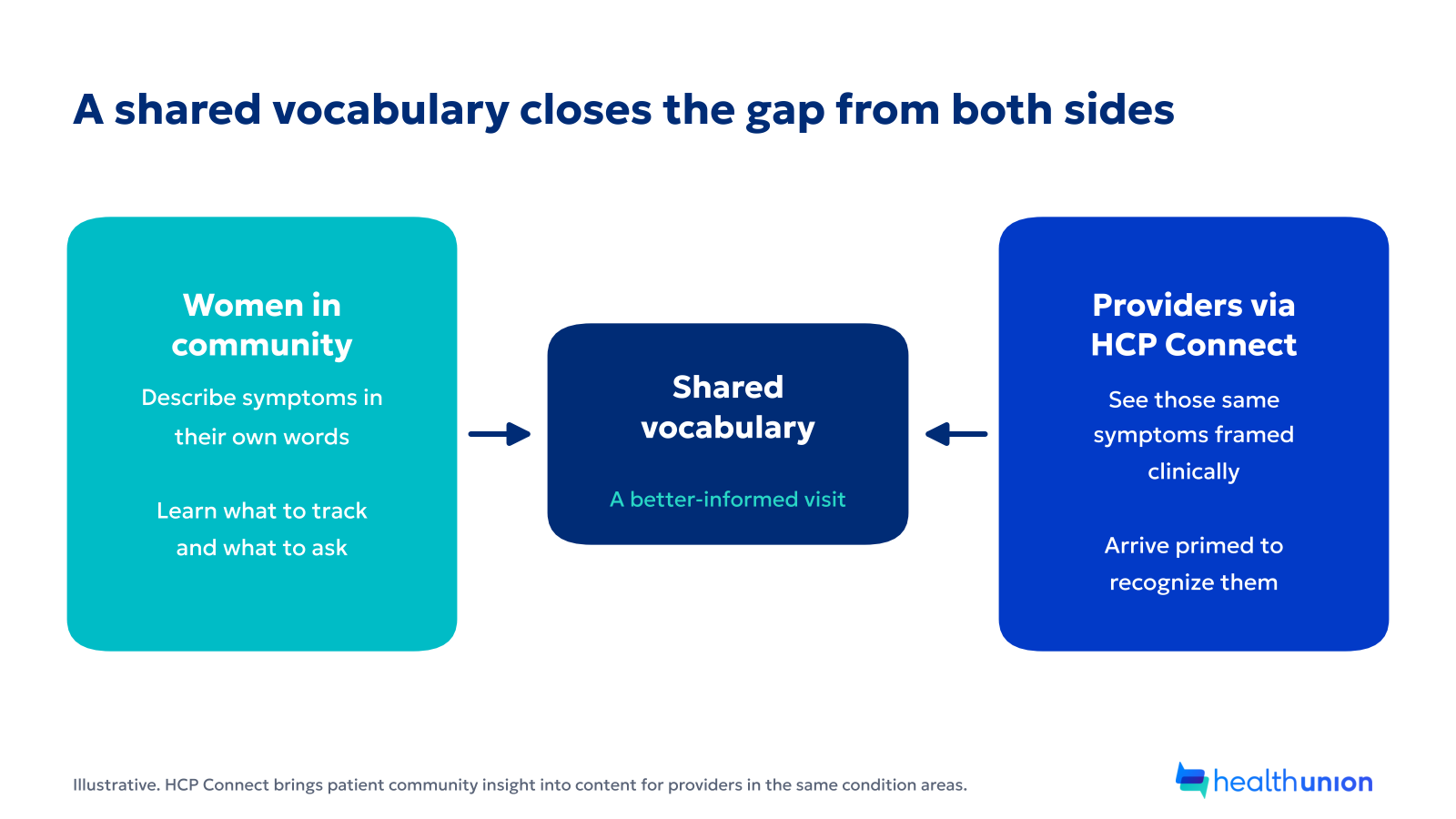
Health Union built HCP Connect, our communities for healthcare professionals, around this exact principle. Our provider networks draw on more than 15 years of authentic patient conversation across our condition-specific communities, ensuring that the clinical content HCPs engage with reflects how patients actually talk about their lives. For women’s health brands, this alignment means the same real-world insights can inform both what a woman learns in her community and what her provider expects to hear during an appointment.
What This Means for Brands in Women’s Health
- Start with the words women already use. Community conversations reveal how women naturally describe their symptoms and daily disruptions. Ground both patient and HCP messaging in that authentic language rather than relying solely on clinical terminology.
- Equip women for the conversation, not just with awareness. Symptom trackers, question lists, and discussion guides directly answer what women are asking for, while giving time-pressed providers a clearer picture of the patient’s history.
- Run patient and provider programs in the same vocabulary. Nearly a quarter of women in our survey are actively looking for better ways to talk to their doctors. Running patient and HCP campaigns from the same real-world insights ensures both sides of the exam room are working from the same script.
- Measure whether the conversation happened. Look beyond basic awareness metrics to track whether women raised the topic with a provider, felt heard, and moved closer to a diagnosis. Those milestones show whether your brand is actually helping close the gap.
Closing the Women’s Health Gap From Both Sides of the Exam Room
Simply encouraging women to speak up louder has never been enough to fix disparities in care. Women are already speaking up in our communities and in their doctors’ offices, and they are actively looking for tools to help them be understood. When patient communities give women clear words to describe their experiences, and providers are prepared to recognize those exact descriptions, the exam room conversation finally becomes a place where the health gap starts to close.
Talk with our team about building a shared vocabulary program for your brand to help close the women’s health gap in care and drive better outcomes for patients, HCPs, and your brand.
Sources: Data comes from Health Union’s 2026 In America survey (13,984 women and 4,255 men living with chronic conditions), and a May 2026 Menopause-Community.net poll (n=75).
Women Have the Symptoms. What They Need Is a Shared Language With Their Doctors.
Over half of women with endometriosis signs are undiagnosed. See how a shared vocabulary with HCPs can help close the women’s health gap.