The Vocabulary Gap
Healthcare has spent years making clinical information more accessible. And that work matters.
But there’s another layer we talk about less: making sure healthcare sees the life happening around the diagnosis.
Clinical language explains the condition. Patient language captures what it means to live with it.
This is where patients talk about the grocery trips they plan around their energy levels. The symptoms they’re not sure are “bad enough” to mention. The quiet calculations they make every day while trying to balance their health with the life they want to live.
Inside these moments are meaningful signals—what patients need, value, and struggle to put into words.
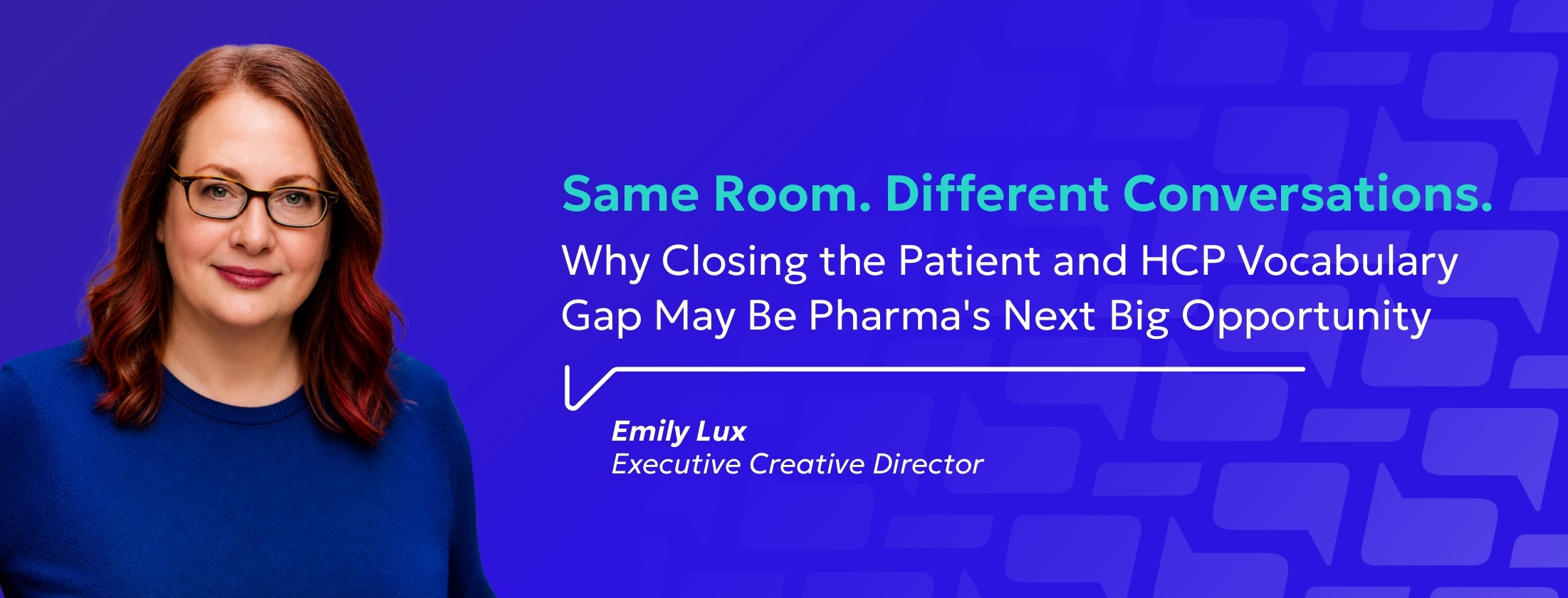
This is the Vocabulary Gap: the space between how healthcare defines a condition and how people describe its impact on their daily lives.
For pharma marketers, that gap represents something bigger—an opportunity to bridge what patients experience with the conversations that shape their care.
The Opportunity: Building a Shared Vocabulary
The future of healthcare communication isn’t choosing between clinical expertise and patient experience.
It’s connecting them.
Because the most powerful treatment conversations happen when patients and providers have the words to understand each other.
That shared vocabulary doesn’t come from rewriting medical terms in simpler language.
It comes from listening to the conversations patients are already having.
At Health Union, our communities surface the moments traditional research often misses. The questions patients ask when they’re not in the exam room. The words they use when they’re talking to someone who truly understands. The everyday realities that don’t always fit neatly into a symptom checklist.
Combined with our proprietary HCP offerings, those insights help bring both sides of the healthcare conversation closer together.
The patient perspective. The provider perspective. A vocabulary built for both.
Making the Connection
Getting to a shared vocabulary takes more than creating a better glossary.
It starts much earlier.
Listen Where Real Conversations Happen
The most valuable insights often aren’t found when patients are asked to describe a condition. They emerge when patients are simply talking about living with one.
Connect Lived Experience to Clinical Meaning
“I can’t get through my workday anymore” and “functional impairment” may describe the same reality. The opportunity is helping each side recognize the other.
Bring that Understanding to Both Sides of the Exam Table
Better patient education is important. Better provider resources are important. But the real opportunity isn’t strengthening one side of the table. It’s strengthening the connection between them.
Same room. Same appointment.
But this time, one conversation.